
Mark your calendar — it's time for a 4th Summit!
Berlin 2019, Amsterdam 2024, Würzburg 2025 — and now the time has come to invite you to our fourth major summit! 🎉
Join us for two days of gaining knowledge about web accessibility, exchanging experiences and meeting like-minded enthusiasts from all over Europe and beyond: May 9-10, 2026, again in beautiful Würzburg, Germany!
Again, the summit will be jointly run by multiple web accessibility and inclusive design related meetups from all over Europe. And again, it will feature a full-day BarCamp and a second day with community run workshops.
Mark the weekend on your calendar, grab a ticket and plan for sufficient time — Würzburg is a beautiful city to visit!
How do I benefit?
As an accessibility enthusiast, you will meet a lot of like-minded people from various disciplines and with all sorts of skill level. You will be able to share your experiences, broaden your horizon and make new friends.
As a meetup or event organiser, you will get new impulses for your events, put them into a bigger context and just have a lot of fun with your usual attendees who will hopefully join you to the Summit. Take it as a super-social excursion that takes you out of your usual boundaries. 😉
Organising? Join in!
If you're organising an accessibility meetup, inclusive design related event or anything similar and want to get involved with the Summit, please get in touch. We hope to be able to mobilise many accessibility enthusiasts from Germany, the Netherlands and many other countries. We'll try to get in touch with as many groups and meetups as we get to know of, but you're welcome to be faster than we are. You don't necessarily have to take an active role but we'd still appreciate your input.
BarCamp + Workshops
We run the summit as a 2-day event:
- Day 1 is all about conversation and sharing experiences. BarCamp-style sessions mixed with a handful of pre-planned presentations for all attendees, pretty much like we had in the past years.
- Day 2 is for learning, expanding our knowledge and putting things into practise. Visit one of several workshops about developing and designing accessible websites and digital content, run by community members like yourself.
BarCamp Sessions
In addition to the pre-planned presentations, there will be further parallel sessions, which will be jointly decided on the morning of the event in the style of a BarCamp. Each participant can propose a session — it does not have to be a prepared presentation. Just bring your own topic! It can be a discussion round, an exchange of experiences, or you are welcome to show what you have been working on recently. One rule only: No sales or recruitment pitches! The audience will decide together which topics will become a session.
Pre-planned presentations
For the BarCamp day, we'll use a hybrid schedule style with both spontaneous sessions and pre-planned presentations. To shape the pre-planned part of the programme, we are currently running an anonymous Call for Presentations. A jury of dedicated volunteers from the Accessibility Club community will be selecting a set number of presentations from the submissions to create an engaging core programme for the Summit. If you'd like to contribute, check out the Call for Presentations and submit your idea!
Captions & Live Stream
The pre-planned presentations will be supported by human-made live captions that can be read on site on a monitor and on private devices via an internet connection (e.g. on a smartphone).
In addition, the pre-planned presentations will be recorded on video and published after the event. The presentations will also be streamed live during the event if the technology does not let us down. All ticket holders will be sent the access data for the live stream in a timely manner to the e-mail addresses stored in their tickets.
Call for Presentations
Our Call for Presentations has now closed. We would like to thank everyone who submitted their ideas! The next step is the jury process, where a group of dedicated community members will carefully review all submissions to curate an inspiring line-up for the Summit.
The selected presentations will form a dedicated track during the BarCamp day, creating a strong core programme for the event. These presentations will be live captioned and live streamed to ensure accessibility and reach.
We are excited to see the diversity of ideas and perspectives that were submitted. Our CfP was completely anonymous — we were not looking for big names, but for great ideas! We especially encouraged new voices and those from underrepresented groups to share their perspectives on accessibility in design, development, or community work.
Even if your proposal does not make it to the jury’s shortlist, you are still welcome to bring your idea to the BarCamp day and present it spontaneously as a session.
Call for Workshops
The Summit isn’t just about listening — it’s about doing! If you want to teach, guide, or collaborate hands-on with others, we invite you to propose a workshop. Submissions are open until Thursday, April 30, 2026, at 23:59 (Europe/Berlin), so bring your ideas to life and help make accessibility more practical for everyone. The selected workshops will take place on Sunday, May 10, 2026, at the THWS, complementing the BarCamp day with hands-on sessions.
As a workshop host, you will receive 80% of the participation fees (€ 25 for half-day and € 50 for full-day workshops), with the remaining 20% supporting the overall event organisation. Please note that, as a non-profit event, we are unable to cover travel or accommodation costs. However, we will provide the venue and manage participant registration.
We particularly encourage newcomers, people with disabilities, and members of marginalised groups to submit their workshop ideas. Your workshop should focus on teaching and implementing accessibility topics; commercial promotions are not permitted. All accepted workshops will be published on our website.
Fully hybrid
Last year, we introduced the option to attend the Summit remotely via Zoom for the first time. We're happy to say that we'll be offering remote participation again this year.
We're also honest enough to admit that not everything ran perfectly last time. That was new territory for us, and we learned a great deal from the experience. Thanks to those lessons, we're confident that this year's hybrid setup will run more smoothly. We'd like to sincerely thank everyone who joined remotely last year for their patience, and we hope to once again enable many people to take part from a distance.
As before, all BarCamp sessions and workshops are planned as hybrid sessions, supported by the technical infrastructure in the lecture halls at THWS. Each room will have its own dedicated Zoom call, allowing not just passive listening but active, interactive remote participation. We also plan to record the sessions so they can be revisited later.
We aim to make as little distinction as possible between remote and in-person participation. However, we kindly ask everyone to choose the correct ticket type so that we can properly estimate attendance numbers on site and remotely. The Zoom links for the sessions will be sent in good time by email to all remote ticket holders, using the email address provided during ticket registration.
Schedule
| Time | Agenda item |
|---|---|
| - | Accessibility 101This session is explicitly aimed at all those who are new to accessibility and would like to familiarise themselves with the most basic concepts and terms of accessibility before the actual event. The presenters will guide you through the key principles and ensure that you have a better understanding of some of the day's topics. The session is designed to give you more confidence and understanding of the broad field of accessibility and allow for an initial exchange with like-minded enthusiasts. Performed by |
| - | Doors open |
| - | Opening Performed by |
| - | Session planning |
| - | Tech as Cognitive Accessibility: Designing Systems for ADHD BrainsMany digital systems assume stable attention, reliable working memory, and consistent executive function. These assumptions create barriers for many neurodivergent people. This talk explores how everyday technology can function as cognitive accessibility infrastructure when intentionally configured. Instead of focusing on productivity tools or behavioural strategies, the session reframes executive function challenges as accessibility design problems. Drawing on real-world system examples, the talk introduces three concepts for designing cognitive accessibility systems and considers how accessibility principles such as those found in WCAG can translate into practical accommodations in everyday environments.
This session offers a shift in perspective from “using tools better” to designing systems that actively support the way people think, remember, and act. Performed by |
| - | Charm and R-E-S-P-E-C-T your users with accessible delightsErik and Daniel will bust the myth that accessible design is old, boring and ugly. Showing examples of charming interfaces using modern techniques. You will learn that CSS is fun and powerful to enhance the user experience and still respect the users needs. Hands on code examples on how to respect your users settings such as:
You will learn
Target audience Developers, QA and UI/UX will benefit most from this session but it is valuable to any role to know what is possible with great accessibility in mind. Performed by |
| - | Lunch break |
| - | Heading level million - multiple modalities of expressing the semantic webWhen designing a <h1> element, we often expect to hear "heading level 1". Is that the only possible outcome? What if we could express semantic properties through sounds, a change in voice or even Braille shapes? Should developers seize control of such representations or leave it all to the users? In this presentation we will take a look at features offered by screen readers that enhance the output of semantic properties traditionally expressed by brief spoken announcements. Topics covered in the talk include:
Participants will leave the presentation equipped with a new perspective of perceiving web content and ideas for considerations when designing accessible interfaces. Performed by |
| - | Ready for the Standard Update: A Deep Dive into EN 301 549 V4.1.0With ETSI’s planned publication in October 2026, EN 301 549 V4.1.0 will become the new harmonized EU standard. This session provides a deep dive into the critical changes from V3.2.1 and offers practical testing procedures for the WCAG 2.2 AA criteria to prepare for the 2026 transition. The ETSI has set October 23, 2026, as the planned publication date for the revised EN 301 549 standard. For accessibility professionals, the time to prepare is now. This presentation dives into EN 301 549 V4.1.0 to analyze the significant updates from V3.2.1, including:
Participants will walk away with practical technical tools and insights into the V4.1.0 changes, ensuring they are ready for the update. Performed by |
| - | Coffe & Tea break |
| - | Implementing Accessibility in a Large Sales and Marketing Platform: From Individual Responsibility to Shared OwnershipImagine working on a long-established web product and deciding to introduce accessibility. Where do you start? This presentation gives a hands-on case study on growing accessibility expertise in cross-functional teams and shifting accessibility from an individual responsibility to a shared practice in complex, agile product environments. The session shares how accessibility expertise was built organically within teams, how practices were embedded into a design system and agile processes, and how accessibility became part of everyday decision-making — from backlog and design to development and testing. It also reflects on what worked, what could be done differently, and what it takes to build sustainable accessibility practices in complex product environments. Performed by |
| - | Accessibility, Grown Up: from compliance to capabilityExploring how we can move from reactive compliance like audit to embedded ownership, governance and measurable progress. Most organisations don’t fail at accessibility because they lack good intentions. They fail because accessibility remains reactive, fragmented, and structurally unsupported. This session explores how the Accessibility Maturity Model can help shift your organisation from ad-hoc compliance to embedded capability. Rather than focusing solely on technical fixes, we examine governance, procurement, culture, training, and accountability — the structural elements that determine whether accessibility becomes sustainable. We’ll see common failure patterns, explore how to start assessing your current maturity, and how to design measurable, achievable progress. Attendees will leave with a clearer understanding of how to move from firefighting to ownership — and how to make accessibility a more integral part of business as usual. Performed by |
| - | Closing Performed by |
| - | Informal evening programmeIn previous years, it has often happened that larger groups got together on the evening of the first day in one or more pubs or restaurants in the city centre and continued the conversations there. We’ll try again this time to make a generous reservation and would be happy if you joined us to sit together, chat, and wind down the day. |
| Time | Agenda item |
|---|---|
| - | Accessibility & gamification: a child's play?Nowadays, more and more websites try to “gamify” their processes, experiences, and promotions.It’s fun, engaging, catches the eye, and involves the user — but nine times out of ten (often more), it’s not accessible. It is therefore far from being child’s play for users with disabilities. It can even prevent them from accessing the information, products, or services provided through these games. The aim of this workshop is to work on the design of mini-games — from ergonomics to visual design, and possibly including technical considerations about what would be feasible from a development standpoint (without necessarily going through the full development process). The goal is to understand the complexity.
Workshop by |
| - | Accessiblity, Grown up: Getting started with accessibility maturityMoving from reactive accessibility to sustainable organisational capability requires more than audits and good intentions. It requires structure, ownership, and measurable progress. This full-day, hands-on workshop provides a practical introduction to the Accessibility Maturity Model (AMM) and guides participants through the first steps of applying it within their own organisations. We will explore the dimensions of maturity in depth, and look at how they connect together. We'll make a start to assess your current state, identify structural gaps, define meaningful proof points, and create realistic next-step actions. Through guided exercises, group discussions, and structured mapping activities, attendees will begin building their own maturity baseline and initial action plan. You'll leave with a better understanding of where your organisation is at and how to can start moving forward. Workshop by |
| - | Ready to Level Up? Design Your Own Accessibility GameRules are boring. Games are fun. Digital accessibility is full of complex criteria that are hard to teach and harder to remember. What if you could pack all that knowledge into a game? In this workshop, you won’t just play – you will create. You will design a board game that teaches accessibility in a fun way. What you will do:
Who is this for? Everyone!
Workshop by |
| - | Testing on a mobile phoneMeet Daniel who uses a screen reader, which is an assistive technology that reads out elements and text on screen when navigating programs, apps or websites. To be able to do this, it relies on well written semantic code, ALT-texts and clear labelling. Testing with a screen reader is vital to ensure you have a product that works for everyone and to be compliant. All operating systems nowadays have built in screen readers, for Android it is called TalkBack and for iOS it is VoiceOver. Everyone can do simple testing with their phone to find issues. Part 1 - Screen reader testing (on mobile)
Part 2 - Mobile testing
Workshop by |
| - | Accessible by Default: A Practical Guide to Vibe Coding with AIWe are living in a time of rapid digital transformation. With AI tools like Cursor and Figma Make, products can be built through vibe coding and shipped in no time. Speed is becoming the priority, and accessibility risks being treated as secondary. This workshop introduces a lightweight guide to embedding accessibility essentials into LLM workflows so inclusive practices become part of the process by default. Participants will learn how to start vibe coding responsibly, integrate Figma designs into MCP tools like Cursor, structure prompts for more reliable and accessible results, and use features in Cursor and Figma Make to generate semantic, accessible websites. Kitty's goal is simple: to enable more people to use AI to create products that are functional, beautiful, and accessible. Workshop by |
| - | Designing Cognitive Accessibility Systems: Using Everyday Technology as ADHD AccommodationsMany digital systems assume stable attention, reliable working memory, and consistent executive function. These assumptions create barriers for many neurodivergent people. This hands-on workshop reframes executive function challenges as cognitive accessibility design problems and explores how everyday technology can function as assistive infrastructure. Participants learn a framework with three layers:
Participants will map cognitive barriers, redesign environments to carry cognitive load, and build simple cognitive accessibility systems using everyday technology. Workshop by |
Performers
-

Oliver Vaupel
Designer and Web Accessibility Specialist
- Internet
- https://ovau.de
- ovaudesign
-
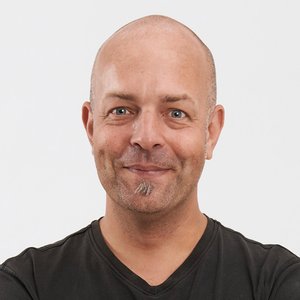
Joschi Kuphal
Designer, programmer, lecturer, event organiser and restless tinkerer from Nuremberg
- Internet
- https://jkphl.is
- Mastodon
- @jkphl@mastodon.social
- joschikuphal
-
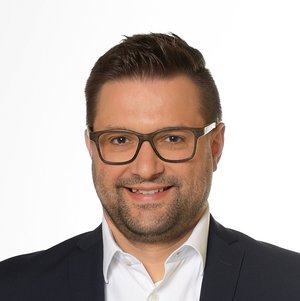
Tobias Aubele
Professor in the field of usability, human-computer interaction and accessibility, head of the e-commerce degree programme and consultant
- Internet
- https://fiw.thws.de
- tobias-aubele
-

Eleanor Beilby
Learning Technologist | Cognitive Accessibility & ADHD Advocate
- Internet
- https://www.eleanorbeilby.com
- eleanorbeilby
-
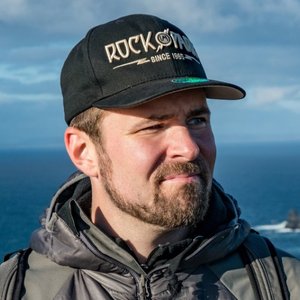
Erik Gustafsson Spagnoli
Accessibility Specialist
- Internet
- https://www.a11y.se
- valross
-
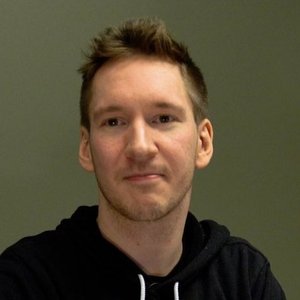
Daniel Göransson
Accessibility specialist
- danielgoransson
-
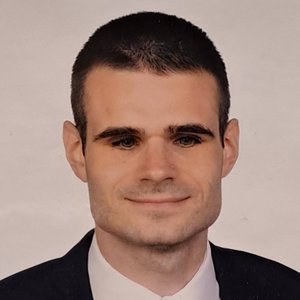
Paweł Masarczyk
- Mastodon
- @piciok@dragonscave.space
-
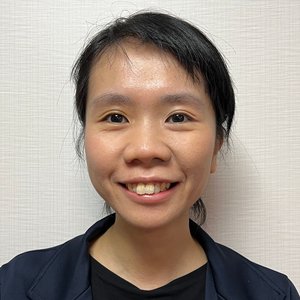
Susie Ching Ying Chan
- susie-ching-ying-chan-24b696148
-

Christiane Deneser
- Internet
- https://christianedeneser.com
- christiane-deneser-a262b581
-

Ronny Hendricks
Veteran neurodiverse accessiblity specialist
- Internet
- https://toegankelijkonline.nl
- ronnyhendriks
-
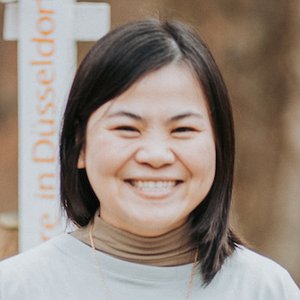
Kitty Huang
UX/UI Designer and accessibility advocate
- kitty-huang723
-
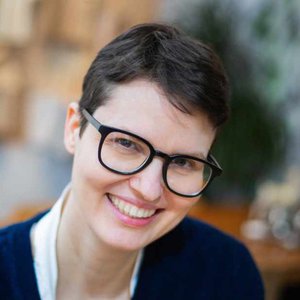
Olivia Richter
Web designer, creating websites, focus on accessibility
- Internet
- https://ideenquelle-webdesign.de
- olivia-richter
-
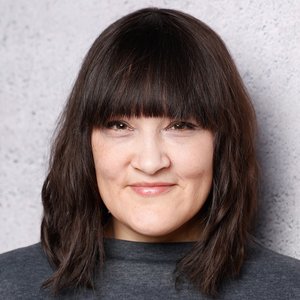
Leonie Theissen
Designing brands and communication for an inclusive world
- leonie-theissen-699786189
-
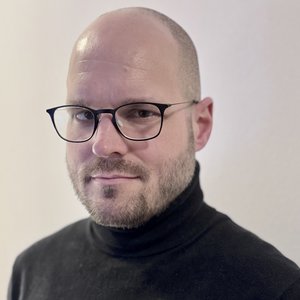
Falko Melz
Accessibility consultant, strategist, and advocate for inclusive digital transformation
- falko-melz-38574124
-
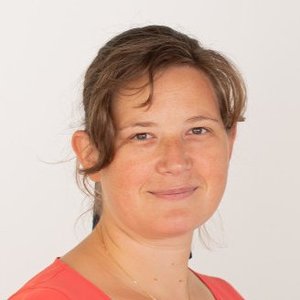
Natacha Madeuf
Accessibility expert, curious of everything and languages lover (who learns Dutch for fun?)
- Internet
- https://wonkythoughts.blogspot.com
- nmadeuf
BarCamp Tickets
As always, we do our best to keep tickets for the BarCamp and workshops as affordable as possible. Please take a moment to explore your ticket options:
- A regular ticket for the BarCamp day costs a minimum of €25 (including German VAT). We'll send you extra love if you use Tito's pay-what-you-want option to increase the price yourself — if the Summit is worth more to you and you'd like to help us make it even better. We recommend starting at €30.
- Not everyone can afford to buy a ticket. If you can, please show your support by purchasing a Scholarship Supporter Ticket starting at €50. This will unlock a free scholarship ticket for someone else — and earn you eternal gratitude. You can also increase the price as you wish!
If you are eligible for a bill without German VAT, please read the notes at the bottom of the ticket page before purchasing.
Ticket scholarships
If you really want to attend the BarCamp but can't afford buying a ticket, please don't hesitate and get in touch with us. We're giving away a free scholarship ticket for every supporter ticket that has been sold. There is no formal application process — please just write us a nice email and let us know a bit about you. We love to help you out! 😊
Workshop tickets
Tickets for the workshops on Sunday, May 10, are already available for the first session and will be added gradually as new workshop proposals from the community come in. Participation will also be affordable:
- Half-day workshop for € 25 (incl. German VAT)
- Full-day workshop for € 50 (incl. German VAT)
80% of the ticket revenues will be given directly to the hosts.
IAAP Hosted Certification Exams

We are excited to offer participants the opportunity to sit for official IAAP Certification Exams as part of the Accessibility Club Summit 2026. Available certifications include the
- Certified Professional in Accessibility Core Competencies (CPACC)
- Web Accessibility Specialist (WAS)
- Accessible Document Specialist (ADS).
These hosted exams provide a quiet and supportive on-site environment with supervision. Please note that registration must be completed directly through the IAAP. Only those who have officially registered, paid the exam fee, and received confirmation and instructions from IAAP are eligible to participate. More information and the registration form can be found at https://certification.accessibilityassociation.org.
We look forward to welcoming all registered candidates at the Summit!
Overview
- When: Sunday, 10 May 2026, from 9:00 AM
- Where: THWS, Sanderheinrichsleitenweg 20, 97074 Würzburg, Germany
- Duration: 120 minutes (2 hours); with accommodations 180 minutes (3 hours)
- The exact room will be determined later and will also be signposted on site
- Please make sure to carefully follow the registration instructions below
Critical Information
Our hosted exam takes place before the official May / June examination window. This is only possible through a special arrangement with the IAAP, and it is essential that the following registration procedure is followed precisely. If the stated deadlines are missed, participation in the exam will not be possible. No exceptions can be made. Please make sure to read and follow the instructions below carefully.
1. Get an exam voucher in advance
To register for the exam, you must first purchase a prepaid exam voucher no later than 1 May 2026:
The payment process must be completed at least 5 days before the exam application. Since registration will only be possible on 6 May (see below), we recommend purchasing the voucher as early as possible to avoid any risk. The voucher is valid for one year. Therefore, even if you are unable to take the exam on 10 May for any reason, you will still have sufficient time to take the exam at a later date.
2. Preparing for exam application
- Review the exam options and requirements on the IAAP website: IAAP Global (English exam) or IAAP DACH (German exam)
- Visit the IAAP Certification Portal
- Select “Log In” to sign in to the certification portal using your personal credentials. If you do not yet have credentials, select “Create an IAAP Certification Portal account” on the login page and follow the instructions.
- Important: As soon as possible, and definitely before 6 May, make sure that you are able to successfully log in to the certification portal. We recommend doing this early to allow enough time to resolve any potential issues.
3. Registering for the exam
- Complete the following procedure exactly on 6 May 2026. Earlier or later registration for the exam on 10 May is not possible. We recommend setting an appropriate reminder.
- Log in to the IAAP Certification Portal, select “Apply for a Certification,” and follow the instructions.
- During the registration process you will have the option to select “Hosted Exam”. In the following step of the form, the Accessibility Club Summit will appear as a selectable option.
- Use the exam voucher you purchased in advance to complete the registration.
- If you encounter any issues during registration, contact us immediately. We will do our best to support you. Please note, however, that we have no direct influence over the registration process.
Location
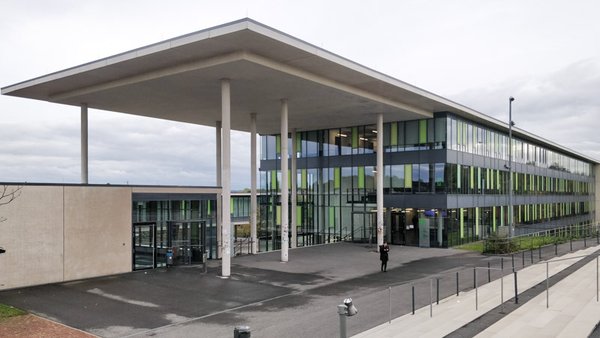
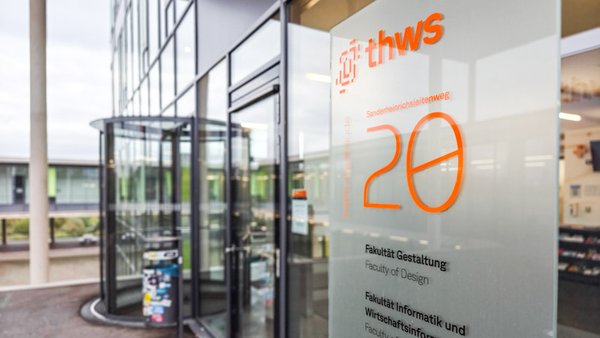
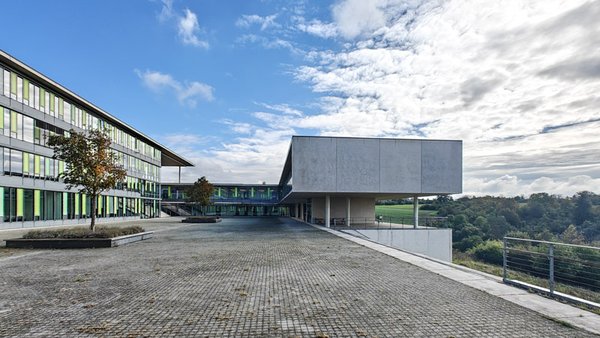
The Summit will be held on the campus of the Technical University of Applied Sciences Würzburg-Schweinfurt (THWS), where Joschi and Tobias also teach. As a state university, the building complex is fully physically accessible.
In and around Würzburg
Würzburg is a beautiful, historic city, nestled among vineyards as far as the eye can see. A visit to the old town is worthwhile not only for the famous “Brückenschoppen”, but also for the hearty, rustic local cuisine and its many sights and landmarks.

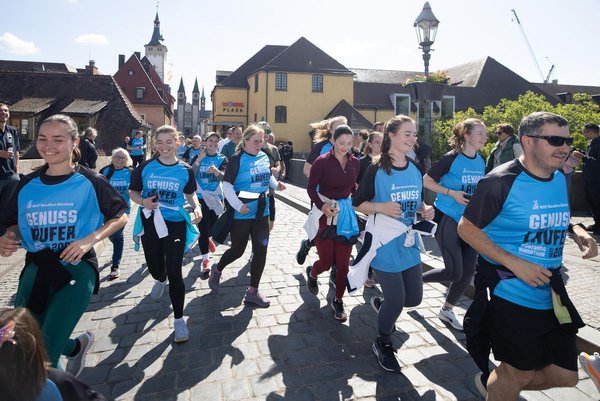
As last year, our Summit once again falls on a very special weekend: on Sunday, 10 May, the Würzburg Marathon will take place. Those who enjoy sport might consider taking part in this well-known event. Everyone else should be prepared for longer travel times or the occasional taxi ride when heading to the university on that day.
How do I stay updated?
Slack Team
You can either join the #announcements channel in our Accessibility Club Slack Team. We use the Slack team for organisational tasks as well as community stuff. If you'd like to broaden its purpose and make it an even more open platform, we'd love to hear your ideas!
Hosts
-
Joschi Kuphal
Designer, programmer, lecturer, event organiser and restless tinkerer from Nuremberg
Joschi is working on the web since the mid 90s and founded the web agency tollwerk in 2000, which he continues to shape to this day. He has shared leadership of tollwerk with his team in an equal, cooperative and self-organizing way since 2022. He launched a couple of event series like the border:none and Material conferences, the Accessibility Club and the CoderDojo Nürnberg. He's occasionally running IndieWebCamps, hosting the monthly accessibility webcast technica11y and used to be one of the driving forces behind the Nürnberg Digital Festival.
- Internet
- https://jkphl.is
- Mastodon
- @jkphl@mastodon.social
- joschikuphal
- Github
- @jkphl
-
Tobias Aubele
Professor in the field of usability, human-computer interaction and accessibility, head of the e-commerce degree programme and consultant
Tobias is a professor of e-commerce at the Technical University Würzburg-Schweinfurt (THWS) and a consultant. Before joining the university, he worked for more than 15 years in an international multi-channel company in various management positions, most recently as Head of E-Commerce, including with the babywalz brand. He heads the laboratory for conversion optimisation and user experience at the Faculty of Computer Science and Business Informatics.
- Internet
- https://fiw.thws.de
- tobias-aubele